
OpenToon - Manga Translator
OpenNovelComics
4.6189.00 Reviews
- Version
- 1.1.6
- Installs
- 100.00K
- Age Rating
- Everyone
Screenshots
Our Review of OpenToon - Manga Translator
 Analysis by Appyee
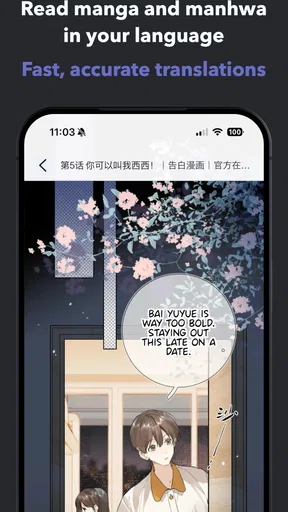
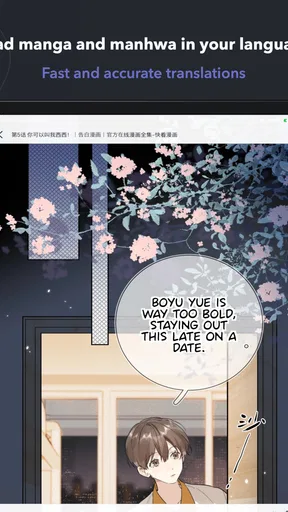
I tried OpenToon - Manga Translator with a simple goal: make translated comics easier to follow without constantly leaving the page to search for explanations. It is an Android comics app from OpenNovel, built around translating manhwa and webtoons rather than acting like a conventional comic reader. That distinction matters. If you already read comics comfortably in their original language, it may feel unnecessary. If language is the main barrier between you and a series, its focused approach is much more appealing.
My overall impression is that OpenToon is most useful as a practical reading companion. It is free to install, aimed at Everyone, and currently sits at version 1.1.2. The app has reached over ten thousand installs and holds a 4.4 average from around 2.4 thousand ratings, which suggests that the basic idea is connecting with readers. I would not treat those figures as proof that every translation will be perfect, but they do indicate that this is more than an experimental icon with no audience.
How OpenToon fits into everyday comic reading
The first thing I noticed is that the app solves a very specific problem: understanding text inside visual storytelling. A normal translation app is usually designed for signs, menus, documents, or short messages. A standard comics reader, meanwhile, assumes that the words in the panels are already readable. OpenToon sits between those two categories. Its purpose is to help readers work through manhwa and webtoons when the original language is a barrier.
That makes the app particularly relevant for people who discover a series through a recommendation, preview, or fan discussion but cannot comfortably read the source language. It may also help language learners who want to compare familiar visual context with text they are still learning. I found that the visual context is important: a speech bubble, sound effect, or short caption makes a rough translation easier to interpret than the same sentence shown by itself.
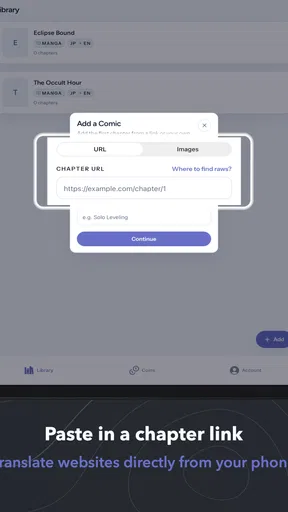
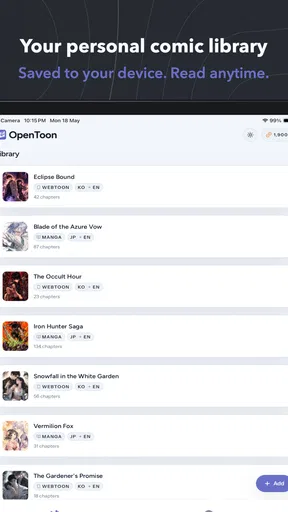
A realistic use case would be reading during a commute. I might save a chapter or open a series before leaving home, then use the app when I have a few quiet minutes. Instead of taking a screenshot, switching to a separate translation tool, cropping the image, and returning to the comic, the translation workflow is tied to the reading task. That saves small amounts of effort repeatedly, and those interruptions are exactly what can make translated comics tiring.
There is also a useful distinction between translating a whole page and translating one difficult moment. When I only need help with a single bubble, translating everything can create clutter and slow down the scene. A careful reader should treat the tool as selective assistance: use it when a line blocks understanding, then continue reading naturally. This is one of the better ways to preserve the pacing of a webtoon instead of turning every panel into a language exercise.
The current experience is focused rather than overloaded
OpenToon does not present itself as a general-purpose entertainment platform. Its store short description is simply “OpenToon,” while the broader summary explains its translation purpose. That restrained positioning is helpful because it sets a clear expectation: install it for translated manhwa and webtoons, not for a giant collection of unrelated comic utilities.
In my experience, focused apps are easier to judge. You can quickly ask whether the translation workflow helps you read. OpenToon earns attention when the alternative is repeatedly copying text into another app. It is less compelling if you already have a comfortable bilingual reading setup or if the titles you follow are officially available in a language you understand.
The app is free, which lowers the barrier to testing it with a few pages. However, in-app purchases range from $2.99 to $29.99 per item. That means “free” should be understood as free to begin, not necessarily as a promise that every possible use will remain without cost. I would start with a short reading session before considering any purchase, especially if translation quality and workflow depend heavily on the particular comic.
What the version and release timing tell me
OpenToon was released on May 24, 2026, and version 1.1.2 is the current version. For an app this early in its public life, I see the version number as a sign of an evolving product rather than a finished, unchanging tool. Small version updates can be important in a translation app because image handling, text recognition, language support, and reading flow all affect one another.
I would therefore judge the current release on its usefulness today, while keeping expectations realistic about future refinement. A recent app can improve quickly, but it can also have rough edges that a mature comics reader has already polished. OpenNovel has a clear opportunity to improve the experience around difficult panel layouts, unusual lettering, and the difference between dialogue and decorative sound effects.
For existing users, the move to version 1.1.2 is best viewed as part of that continuing development. I would update before judging the app, then test the same kind of page that previously caused trouble. Translation tools can appear better in general while still struggling with the exact feature a reader cares about, such as vertical text, small lettering, or a crowded action panel.
Where the translation workflow can save time
The strongest practical benefit is reduced app switching. With a normal camera translator, I have to leave the reading experience, capture an image, wait for recognition, read the result, and reconstruct where I was in the panel. That process is acceptable for one sign but frustrating across an entire chapter. A comics-focused translator has a better chance of keeping the page and its context together.
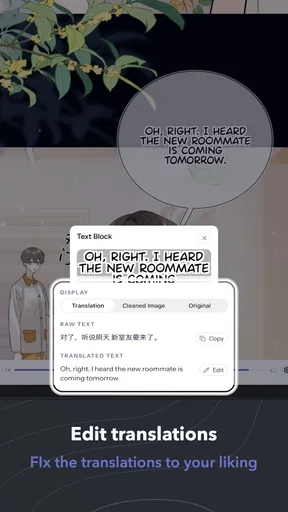
A second advantage is that translation can be treated as a reading aid rather than a replacement for the artwork. I can look at the character expression, panel order, and visual emphasis first, then use the translated wording to confirm what is happening. This is especially useful when a machine translation sounds awkward but the scene makes the intended meaning clear.
My third tip is to avoid judging a translation from an isolated sentence. Comics often rely on previous panels, implied subjects, jokes, and speech patterns. If a line looks strange, read the surrounding exchange before deciding that the app failed. Sometimes the problem is not the words themselves but the missing context. OpenToon cannot remove every ambiguity created by the source material, so the reader still needs to interpret the scene.
Another useful habit is to distinguish dialogue from effects. A large stylized word in an action panel may not behave like ordinary speech. If the app attempts to translate it, the result may be less useful than simply understanding the visual action. I found that selective attention produces a better experience than demanding a perfect translation of every mark on the page.
Who will get the most from it
I would recommend OpenToon first to readers who regularly encounter manhwa or webtoons in a language they cannot read fluently. It is also worth trying for people who are tired of taking screenshots for every unfamiliar bubble. The app makes the most sense when translation is part of the reading routine, not an occasional emergency.
It may be valuable for language learners too, but I would use it carefully. A machine-assisted translation can help reveal the broad meaning of a conversation, yet it should not be treated as a perfect lesson in grammar or natural phrasing. Comics use slang, shortened expressions, dramatic exaggeration, and culturally specific jokes. For study, I would compare the translated result with a reliable dictionary or language reference instead of memorizing every sentence as an exact model.
Casual readers may appreciate the low-risk entry point because the app is free to start. The Everyone age rating also makes its general positioning approachable, although the age label does not describe the themes of every comic a user might seek elsewhere. Parents should still pay attention to the content of the series being read rather than assuming that the app’s rating makes every story suitable for every child.
Who should choose another approach
I would skip OpenToon if your main requirement is a polished library of officially localized comics. In that situation, a dedicated publisher or platform with licensed translations may provide smoother wording, consistent terminology, and better lettering integration. OpenToon is solving access and comprehension; it is not automatically equivalent to a professional localization.
I would also hesitate if you need exact translations for professional, academic, or legal reasons. Comic dialogue is informal and context-heavy, and any translation tool can misunderstand names, tone, or implied meaning. This app belongs in the “help me understand what I am reading” category, not the “give me a certified translation” category.
Readers who already use a strong screen translation feature may not gain enough to justify another app. The advantage here depends on how much OpenToon reduces friction compared with your current routine. If your existing method lets you translate a bubble quickly without losing your place, the difference may be small. The app is most convincing when your current alternative involves repeated screenshots, cropping, and switching between several tools.
Limitations that affect the decision
The central limitation is accuracy. Translation from comic images has several difficult steps: recognizing the lettering, separating text from artwork, identifying reading order, and converting the result into natural language. A mistake at any stage can change the meaning. Small bubbles, decorative fonts, overlapping artwork, and vertical layouts are all situations where I would expect extra caution.
There is also a quality trade-off between speed and interpretation. A quick translation may preserve the general action but flatten humor, honorifics, sarcasm, or relationships between characters. That can be enough to follow a fight or understand the next plot point, but it may weaken the emotional detail that makes a series memorable.
Another point to consider is cost. Because the app includes purchases from $2.99 to $29.99 per item, heavy use may eventually require spending. I would not buy based solely on the promise of convenience. First, test the languages and comic layouts you actually read, then decide whether the saved time is worth the price. The right value calculation is personal: a frequent reader may benefit more than someone who opens translated comics once a month.
The app’s relatively early release stage is another reason to keep expectations measured. Version 1.1.2 shows that the product is being developed, but it also means the experience may continue to change. Existing users should keep notes about recurring problems and check whether updates improve those exact cases. New users should be willing to tolerate some experimentation if the core translation idea solves a problem they have often encountered.
Small habits that make the app more useful
Before translating, I recommend reading the panel visually. Look at who is speaking, where the characters are facing, and what happened immediately before the line. This gives you a reference point when the wording comes out awkwardly. It also prevents the common mistake of accepting a literal result that contradicts the scene.
For long reading sessions, translate only the lines that block progress. If every bubble is processed, the chapter can become slow and mentally fragmented. Selective translation keeps OpenToon in its best role: a bridge over difficult language, not a layer that covers the entire reading experience.
When a result seems wrong, compare nearby bubbles rather than repeating the same action without thinking. Character names, pronouns, and implied subjects often become clearer through the conversation. If the same unusual term appears several times, remember that consistency may matter more than a perfect single-line translation. A slightly rough term that stays understandable can be more useful than changing interpretations from panel to panel.
I would also use purchases gradually. Start with the free experience, identify the exact moment when the app saves you work, and only then consider paying. This approach is especially sensible because the purchase range is broad. A reader who only needs occasional help should not assume that the highest-priced option is necessary, while a daily reader can judge the cost against the number of chapters where it genuinely prevents interruptions.
What I would watch as OpenToon develops
The most important future question is whether later updates make difficult comic pages more dependable. I would watch for improvements in text recognition, panel order, vertical writing, stylized sound effects, and the handling of mixed text and artwork. These details matter more to me than a longer feature list because they determine whether the app works on real pages rather than only clean examples.
I would also pay attention to how OpenNovel balances accessibility with paid use. The free starting point is attractive, but readers need a clear sense of what regular use costs before committing to the app as part of their routine. Transparent value matters particularly here because translation is not a one-time novelty for many users; it can become part of every chapter.
Finally, I would look for signs that the app is becoming better at preserving the feeling of reading a comic. The best outcome is not merely a translated sentence. It is a workflow that lets me understand the story, keep my place, notice the art, and continue without constant technical interruptions.
My recommendation after using it
OpenToon - Manga Translator is a sensible app to try if language is stopping you from enjoying manhwa and webtoons. Its focused purpose, free entry point, and current 4.4 average make it easy to justify a test, while the early version and in-app purchase range are reasons to evaluate it with your own reading material rather than relying on expectations.
I would recommend it to curious readers, language learners who understand the limits of machine translation, and anyone exhausted by switching between a comic reader and a separate translator. I would not make it my first choice for polished official localization, precise translation work, or readers who already have an efficient solution.
For me, the app’s value comes from reducing friction at the exact moment a comic becomes difficult to follow. It does not remove the need for judgment, and it cannot guarantee that every joke or dramatic nuance will survive translation. Used selectively, though, it can turn an inaccessible page into a readable one. That is a modest promise, but for the right reader, it is a genuinely useful one.
Privacy and Permissions
See what permissions an app requests and how it handles your data.
- Photos/Media/Files
- read the contents of your USB storage, modify or delete the contents of your USB storage
- Storage
- read the contents of your USB storage, modify or delete the contents of your USB storage
- Camera
- take pictures and videos
- Microphone
- record audio
- Wi-Fi connection information
- view Wi-Fi connections
- Other
- view network connections, full network access, run at startup, draw over other apps, control vibration, prevent device from sleeping, Google Play license check
Verdict
Strengths of OpenToon - Manga Translator
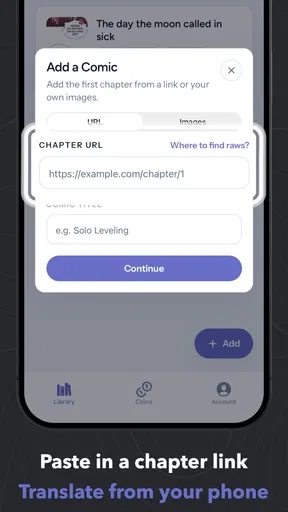
- Translates manga panels directly from imported images.
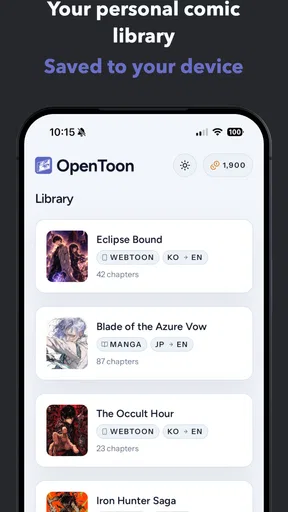
- Supports multiple languages for broader reading access.
- Simple interface makes the main translation tools easy to find.
- Useful for checking unfamiliar dialogue while reading offline scans.
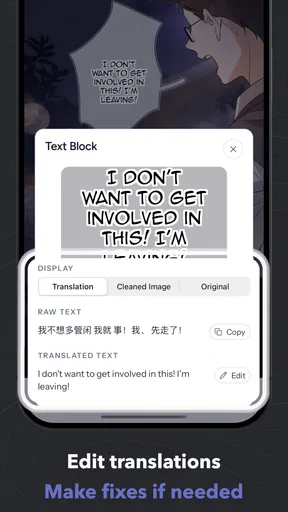
- Can save translated images for later reference or sharing.
Limitations of OpenToon - Manga Translator
- Translation quality may vary with slang, jokes, and handwritten text.
- Text-heavy or low-resolution panels can produce inaccurate results.
- Image processing may take longer on older phones.
- Some features or usage limits may require in-app purchases.
- Privacy details should be checked before uploading personal images.
Similar Picks in This Category
View All
WEBTOON: Manga, Comics, Manhwa
NAVER WEBTOON4.6

MangaToon: Comic & Manga
MangaToon4.3

네이버 웹툰 - Naver Webtoon
NAVER WEBTOON4.3

Tapas – Comics and Novels
Tapas Entertainment Inc.4.2

Lezhin Comics - Daily Releases
LEZHIN ENTERTAINMENT3.3

WebComics - Webtoon & Manga
WEBCOMICS HOLDINGS HK LIMITED4.4
Frequently Asked Questions
What is OpenToon - Manga Translator and who is it for?
OpenToon - Manga Translator is designed to help readers understand manga, manhwa, webtoons, and other illustrated content written in unfamiliar languages. It can be useful for casual readers, language learners, and fans who want to translate dialogue or text directly from pages. The app is especially convenient when you are reading imported images or content that does not offer an official translation.
How does OpenToon translate manga and comic pages?
The app generally works by analyzing text visible in a manga or comic image, recognizing the characters, and converting them into a selected language. Depending on the page quality, font style, text placement, and amount of artwork behind the dialogue, results may vary. Clear screenshots with readable speech bubbles usually provide better translations than blurry, heavily stylized, or crowded pages.
Which languages does OpenToon - Manga Translator support?
Supported languages can depend on the version of OpenToon, its translation services, and the language pair selected in the app. Users should check the language list shown inside the current application before downloading or relying on it for a specific manga. Common languages may be available, but less widely used languages can have limited recognition quality or translation accuracy.
Is the translation accurate enough for reading an entire manga?
OpenToon can be a helpful tool for understanding the general meaning of dialogue, but it should not be treated as a replacement for a professional localization. Manga often includes slang, jokes, sound effects, cultural references, and intentionally unusual speech that automatic translation may misunderstand. It is best used as a reading aid, especially when an official translation is unavailable.
Does OpenToon - Manga Translator require internet access or have privacy concerns?
Some translation and text-recognition features may require an internet connection, particularly when images are processed through online services. Availability of offline tools can vary by app version and device. Before using the application extensively, review its permissions, privacy policy, and any data-sharing information. Avoid uploading private images or sensitive material unless you understand how the app handles submitted content.
